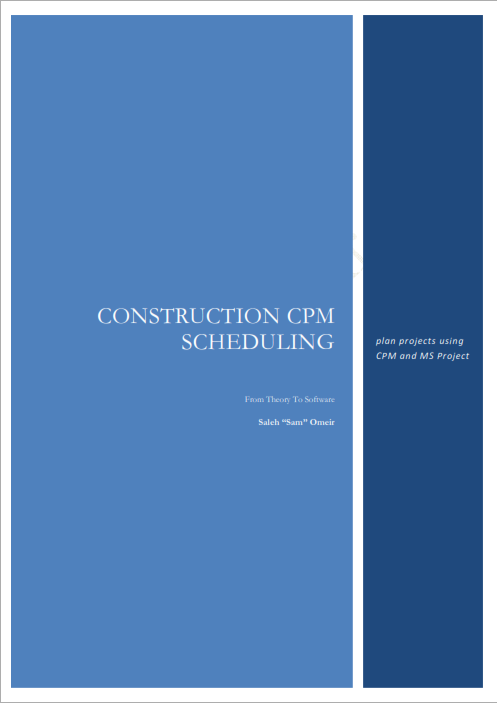
Construction CPM Scheduling: From Theory to Software
A practical training resource for builders, planners, and project engineers
This free training book teaches Critical Path Method (CPM) scheduling the way it should be learned: first by hand, then in software.
Most scheduling materials jump straight into Microsoft Project. This one does not. Module 1 builds the conceptual foundation through manual calculation. Module 2 takes the exact same example network and rebuilds it inside Microsoft Project so you can see the software perform the same math you just completed on paper.
What’s Inside
Module 1 : CPM Theory (By Hand)
- Where schedules actually come from
- Critical Path Method defined
- Scheduling terms and relationship types (FS, SS, FF, SF)
- Manual forward and backward pass calculations
- Float, critical path identification, and common field mistakes
Module 2 : Applied Scheduling in Microsoft Project
- Project setup and core interface
- Building a clean Work Breakdown Structure
- Entering durations and milestones
- Linking logic and identifying the critical path
- Stress-testing the schedule and preparing it for the field
The running example is a realistic Data Hall electrical installation sequence (ductbank, grounding, switchgear, cable tray, MV cabling, and pre-commissioning). Every lesson includes learning objectives, clear explanations, common mistakes to avoid, and practical exercises.
Who This Is For
- Junior planners and project engineers
- Superintendents and field supervisors who need to understand schedule logic
- Anyone who wants a no nonsense bridge between CPM fundamentals and day to day use of Microsoft Project
The material grew out of training sessions delivered to junior planners and superintendents. It is written for practitioners who need usable skill, not theory for its own sake.
Free Download
The complete 43-page PDF is available at no cost.
[Download Construction CPM Scheduling – Free PDF]
++++>> DOWNLOAD THE BOOK Construction CPM Scheduling: From Theory to Software
About the Author
Saleh “Sam” Omeir is a certified Project Management Professional (PMP) and Risk Management Professional (PMI-RMP) with more than two decades of experience in technology, construction, and infrastructure project delivery. He has led complex initiatives across government and private sectors and focuses on turning technical concepts into practical field results.